Lina
Mariners' Museum, Uncurated Search Results
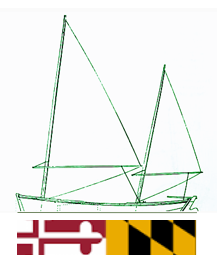
Type: Skipjack
Year: 1910
Builder:
Location: Deep Creek
These records are found in the online catalog of The Mariners’ Museum and Park in Newport News, Virginia. Uncurated search results are presented to give researchers and interested readers an idea of whether the museum’s archives contain information about this vessel and whether it may be worthwhile to visit the museum’s catalog search page for further investigation. Uncurated results may be inaccurate or incomplete.
Search mode: Exact Name. Search phrase(s): "Lina". Results returned: 32. Results displayed in this table: 32.
Use these buttons to send uncurated search results to your own app or text document for further research. First, check the box for any row, or click "Select All" then uncheck any rows. Then click "Show Selections". You can then copy your selections from the text box and past them into your app.
| Fetch? | Row ID | Media | Date | Vessel | Place | Related Places | Inscription/Marks | Subject | Notes | Archive Number |
|---|---|---|---|---|---|---|---|---|---|---|
| 1 | 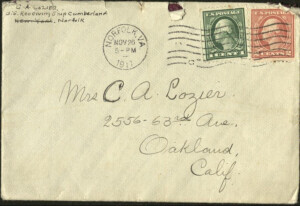 | 11/8/1917 | Cumberland (Unclassified miscellaneous auxiliary ship : IX-8). | Two-page letter from Chester A. Lozier aboard U.S. Receiving Ship Cumberland to his wife Lina about how much he misses her and hopes to come home soon. Mentions picking up a wireless that makes Lozier feel closer to home and his wife. Also discusses his faith that a higher power is watching out for them. Includes envelope. | MS0038/-01.01#01 | |||||
| 2 | 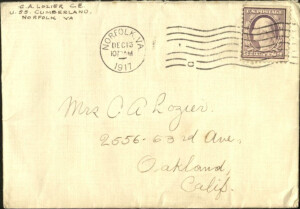 | 12/12/1917 | Cumberland (Unclassified miscellaneous auxiliary ship : IX-8). | Four-page letter from Lozier aboard the U.S.S. Cumberland to his wife Lina. He encourages her to come by Christmas and writes that he wishes she had come last week when he wired her. He could come home, if he gets furlough, and they all come back after Christmas but he reasons that they don't have very much money and it would be wiser to save it and Lina and his mother come for Christmas instead. He again emphasizes that a higher power is watching over them. Includes envelope. | MS0038/-01.12#01 | |||||
| 3 | 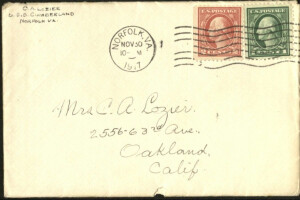 | 11/29/1917 | Cumberland (Unclassified miscellaneous auxiliary ship : IX-8). | Six-page letter from Lozier aboard the U.S.S. Cumberland to his wife Lina about how much he misses her. He walked around Berkeley and South Norfolk and tells his wife that they are not as nice as the cities in the West. He is going to visit Norfolk after pay day December 5th to see if its nicer, and is inquiring in Berkeley and Norfolk for places to stay in case his wife and mother come to stay if he's stationed there. He recently sent a telegram to Lina and she sent one back. He also discusses word that Germany is practicing breeding in order to create more Germans in an effort towards German dominance, and how scary and serious the war is. Includes envelope. | MS0038/-01.04#01 | |||||
| 4 | No image URL. | 6/13/1918 | Six-page letter from Hardy Hutchinson Jr. to his aunt Lina. His letter includes details about his recent graduation ceremony, the program order, and the dance afterwards. He mentions that he was one of the students who gave a talk during the ceremony. He also mentions that he will start high school in three months at Oakland Technichal High School. Includes envelope addressed to a Norfolk, Virginia address. | MS0038/-01.17#01 | ||||||
| 5 | No image URL. | Women fishers–India–Kerala; Fish trade–India–Kerala; Fisheries–India–Kerala; Women–Economic conditions. India–Kerala; Women–Social conditions–India–Kerala | Women in fishing economies of Kerala, India : __an examination of the their day-to-day experiences __by Lina Samuel | LB81761 | ||||||
| 6 | 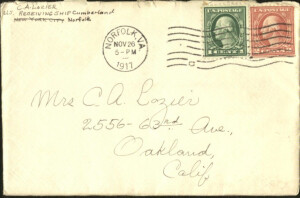 | 11/1/1917-11/26/1917 | Pittsburgh (Heavy cruiser : CA-4); Cumberland (Unclassified miscellaneous auxiliary ship : IX-8). | Eight-page letter from Lozier aboard U.S. Receiving Ship Cumberland to his wife Lina about how much he misses her. He got transferred from the Pittsburgh in South America and was headed towards the East Coast, when he sent a wire to his wife letting her know of his transfer. He worked as part of the crew and talks of the weather as they cross the equator and end up at the Norfolk Navy Yard after coming up from Hampton Roads. He is now on the Receiving Ship Cumberland and tells his wife to delay a visit until he knows what his duty will be; whether on a ship or a navy yard; and where. Includes envelope. | MS0038/-01.02#01 | |||||
| 7 | 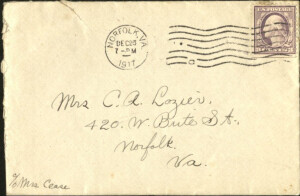 | 12/23/1917 | Two-page letter from Lozier to his wife Lina and his mother. He writes that he thinks he is to go to Baltimore to get on one of the new merchant ships, although censors may prevent him from saying that later on and may send his mail "via New York." He doesn't know where he will go from there. He also expresses how happy he was to be able to visit with them, and sends a copy of the dates and mileage of his South American Cruise. Includes envelope postmarked from Norfolk, Virginia. | MS0038/-01.14#01 | ||||||
| 8 | 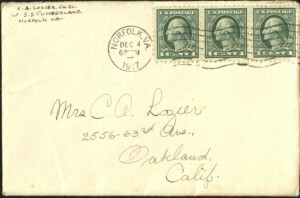 | 12/6/1917 | Cumberland (Unclassified miscellaneous auxiliary ship : IX-8). | Two-page letter from Lozier aboard the U.S.S. Cumberland to his wife Lina. He wired her last night and received a letter from her today. He tells her he will send her any money he gets by P.O. order as he did in South America. He writes about the other men with him, and how he is glad that they waited to have children until he returned. He says that he misses beautiful Rio and dislikes Virginia. Includes envelope. | MS0038/-01.07#01 | |||||
| 9 | 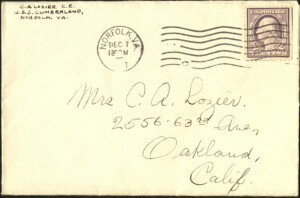 | 12/4/1917 | Cumberland (Unclassified miscellaneous auxiliary ship : IX-8). | Six-page letter from Lozier aboard the U.S.S. Cumberland to his wife Lina. He keeps receiving letters from his wife and mother and they continue to send telegrams to each other. He says that some parts of the town are nice, but he is usually low on money. He writes a lot about how much he misses his wife and regrets that they married only a short time before he left. He continues to make it clear that he does not know when or if he will get transferred, and leaves the decision of moving to his wife. Includes envelope. | MS0038/-01.05#01 | |||||
| 10 | 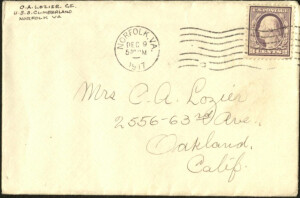 | 12/9/1917 | Cumberland (Unclassified miscellaneous auxiliary ship : IX-8).; Jacob Jones (Destroyer : DD-61). | World War, 1914-1918–Naval operations, American. | Two-page letter from Lozier aboard the U.S.S. Cumberland to his wife Lina. He describes the cold weather in Norfolk and also recounts part of his trip that he couldn't before because of the censor. He tells of the beauty of the West Indies and the many blacks there working, and also of the weather and beauty of Brazil and South America and the fruits there. He also mentions the sinking of the USS Jacob Jones and remarks that “many of the crew were known by the fellows here.” Includes envelope. | MS0038/-01.10#01 | ||||
| 11 | No image URL. | Showboats. | The James Adams floating theater. | LB57725 | ||||||
| 12 | 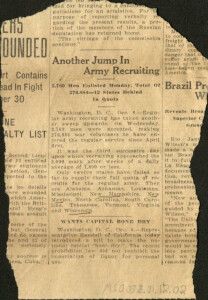 | Before 12/12/1917 | Newspaper clipping enclosed in letter from Chester Lozier to his wife Lina written on December 12, 1917. Article tells of a total of 276,884 enlisted men since April 1. Dec. 6 was the third successive day which recruiting was around a 3,000 daily average instead of its usual 1,000. Only 12 states haven't supplied full quotas for the regular army. | MS0038/-01.12#02 | ||||||
| 13 | 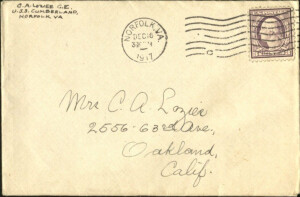 | 12/14/1917 | Cumberland (Unclassified miscellaneous auxiliary ship : IX-8). | Four-page letter from Lozier aboard the U.S.S. Cumberland to his wife Lina. He expresses how upset he is that she won't come to Norfolk, and assures her that if he gets furlough to go home for Christmas she will come back with him. He mentions that they are looking for a Chief Electrician for a new battleship and that he probably won't get it. Includes envelope. | MS0038/-01.13#01 | |||||
| 14 | 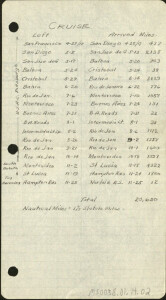 | 4/27/1917-11/25/1917 | Pittsburgh (Heavy cruiser : CA-4); South Dakota (Heavy cruiser : CA-9); Hercules (Harbor tug : YT-13). | One-page handwritten note enlcosed in letter from Chester Lozier to his wife Lina written on December 23, 1917. The note details some of Lozier's past travels while being enlisted. Includes places left and date of departure, places arrived and day of arrival, and miles traveled. Most travel was aboard U.S.A.C. Pittsburgh; then South Dakota, then Tug Hercules. Total miles traveled is 20,650. | MS0038/-01.14#02 | |||||
| 15 | 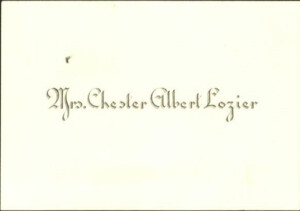 | Before 12/23/1917 | Title devised by Library Staff. Small visiting card has name Mrs. Chester Albert Lozier in nice script printed on front. Visiting card enclosed in letter from Chester Lozier to his wife Lina written on December 23, 1917. | MS0038/-01.14#03 | ||||||
| 16 | No image URL. | Geeste River (Germany)–History.; Bremerhaven (Germany)–History. | Schiffahrt auf der Geeste : __ein norddeutscher Kustenfluss erschliesst eine Region | LB26506 | ||||||
| 17 | 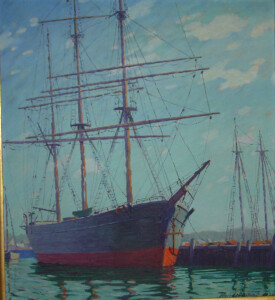 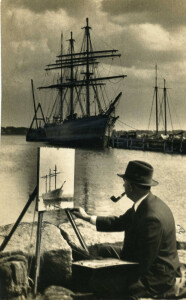 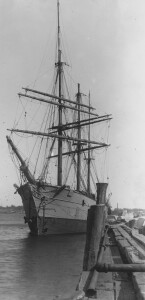 | SHORT DESCRIPTION: Oil painting titled 'Bark Coriolanus' (actually named Lina at the time painting was created) by New Bedford artist Harry A. Neyland. The painting is signed and dated in black at the lower right corner. The three masted vessel (actually named Lina/Lena at the time the painting was created) is shown against Merrills Wharf in New Bedford. Her port side is against the pier and her yards do not carry any sails (the vessel spent a year sitting at Merrills Wharf before leaving on a voyage to Cape Verde on November 20, 1927). The masts of a schooner (without yards) rise above the wharf at the right side. The buildings of the town appear in the background to the left and right of the bark. The water in the foreground is calm and the masts and hull of the vessel are reflected in the slightly rippling water. A photograph in the collection of the New Bedford Whaling Museum by Lynwood M. Chace shows Harry Neyland painting this image in 1927. A photograph in the Nicholson Collection of Whaling Photographs in the collection of the Providence Digital Library shows the vessel at the P.& R. wharf in 1927 and the name Lina is clear on the bow. See attached images. Text on the back of the New Bedford Whaling Museum states: Retouched photograph of Harry Neyland, seated, at work painting a Cape Verdean packet at Merrill's Wharf in New Bedford. Newspaper clipping glued on back of photograph reads, "Harry Neyland of New Bedford Painting an Old Whaler at Merrill's Wharf (Photo by Lynwood M. Chace)." Handwritten below the clipping is, "Painting-Bark Coriolanus-Cape Verde Packet, The last of the large packet ships coming to New Bedford." Although it may have appeared in other papers, the image was published in the Los Angeles Times on January 1, 1928, page 93, suggesting the photograph was taken in 1927. The newspaper clipping has not been found yet. NOTES: An article in New Bedford's The Standard Times, November 16, 1927, page 1, reports that Mr. Harry Neyland would be traveling to Fogo and Praia in the Cape Verde islands on the bark Lina (named Coriolanus in an earlier life and renamed Coriolanus in 1928). The vessel was leaving on November 20th from Merrills Wharf in New Bedford, where it had been sitting for more than a year. His 13-year old son Eugene would accompany his father on the voyage. The article also reported that Mr. Neyland's address was 15 Middle Street, Padanaram which is in South Dartmouth, Massachusetts. NOTES: Harry Neyland was an American painter, sculptor, illustrator, and copyist. His style was essentially American Impressionistic and his compositions covered a wide variety of genres: landscapes, townscapes, ships, marine, harbors, and London and Paris scenes. Neyland was an expert on the whaling industry who would give lectures on whaling and ships during exhibitions of his marine paintings. A 1948 Lowell “Telegraph” article, indicated he had a solo show of over seventy ship paintings at the Whistler House Museum of Art and presented a forty-five minute motion picture of the whaling days and recent times of New Bedford. Neyland was a resident of New Bedford from 1911 and until 1938 maintained a studio on Cuttyhunk island at the entrance to New Bedford harbor. Harry Neyland was instrumental in the saving and preserving of the famous whaleship Charles W. Morgan. While berthed in Fairhaven in 1924, the Morgan was nearly destroyed when the steamer Sankaty caught fire and broke free of her mooring lines and drifted into Morgan's port quarter. Luckily, the Fairhaven firemen managed to save her. After the near disaster, Neyland and some other New Bedford citizens tried to restore and preserve the Morgan, but their attempts were unsuccessful. Neyland persuaded Colonel Edward Howland Robinson Green, the grandson of Edward Mott Robinson, who had been a part owner of the Morgan and from 1849 to 1863 had acted as the vessel's agent for his wife's (Hetty Robinson Green) business (Isaac Howland and Company, who were the other principle owners) to save the ship. Green had the ship towed to his estate in Round Hill (Dartmouth, Massachusetts) and founded Whaling Enshrined, which consisted of himself, Neyland, and John Bullard, the great-grandson of Charles Waln Morgan. The Morgan was restored and kept at Dartmouth until 1941 when it was acquired by the Marine Historical Association (now Mystic Seaport Museum). The Mariners' Museum and Park's collection holds eleven paintings by Neyland. Five form a series titled 'The Story of the Ship' (QO 1-QO 5), three show views of the whaleship Charles W. Morgan under repair (QO 6) and sailing (QO 9, QO 10) , and the remaining three show view of the schooner Fairhaven (QO 11), the bark Coriolanus (QO 7), and the packet ship Amos Peggs (QO 8). VESSEL INFORMATION - VESSEL NAME: CORIOLANUS ALL SHIP'S NAMES: CORIOLANUS, TIPISON, EUGENIA AMELIA, LINA VESSEL TYPE: BARK SHIP BUILDER: A. McMILLAN & SON BUILDER LOCATION: DUMBARTON, SCOTLAND VESSEL BUILT: 1876 DIMENSIONS: 1053 gross tons; 217' length, 35'2" beam, 20'1" draft VESSEL HISTORY: The sailing ship Coriolanus was built in 1876 by A. McMillan & Son, Dumbarton, Scotland, for J. Patton, Jr. of London. Constructed of Swedish wrought iron and lavishly finished in teak, brass, and mahogany, she measured 217.4 feet long, 35.2 feet beam, with a depth of 20.1 feet; she grossed 1155 tons. Although an extremely fast and busy vessel, she showed little or no profit due to high operating costs, so Mr. Patton turned her over to the operating firm of J. Stewart & Son, London. A few years later she as sold to German interests and while under that flag went ashore at Algoa Bay in 1902. It was at that time she lost the original figurehead, a full length figure of a Roman Warrior, Coriolanus. Following the grounding the vessel was completely reconditioned and altered to barque rig with a new figurehead installed. She was then sold to British interests, and in 1903 was sold again to Norwegian buyers. She remained under the Norwegian flag until 1921, at which time she became the property of Panamanian interests, and her name was changed to Tipison. Shortly afterward she was seized by U.S. Customs for smuggling [rum] and sold at U.S. Marshal sale to Portuguese-American interests. With the name again changed to Eugenia Amelia, she entered the Cape Verde Island packet trade between New Bedford, Massachusetts and Cape Verde Islands. For the first time she became a passenger-carrying vessel. At the islands she changed hands again and returned to New Bedford as the Lina with her home port Saint Vincinte, CVI. She left New Bedford in 1927 named Lina, and returned in 1928 under new ownership and a return to her old name, Coriolanus, and Portuguese registry (See New Bedford's The Standard Times, May 25, 1928, page 4). In 1932 she was sold to West African Trading Company, retaining her original name. In all she had flown eight different flags, owned by 18 different firms, and hailed out of no less than 13 different ports. She was broken up at Fall River, Massachusetts, in 1935. Another source indicates that the ship was sold in 1932 to Boston and renamed Hispanola, a scientific and pleasure vessel. | CL575 | |||||||
| 18 | 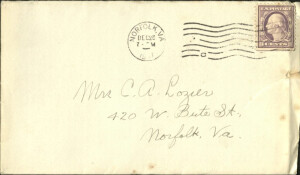  | 12/23/1917 | One-page Christmas card from Lozier to his wife. Card has printed Christmas wishes, with an added note written in below by Lozier to his wife. Top middle of the card has a small decoration. Includes envelope postmarked from Norfolk, Virginia. Envelope addressed to his wife at a Norfolk, Virginia address instead of her previous Oakland, California address. | MS0038/-01.15#01 | ||||||
| 19 | 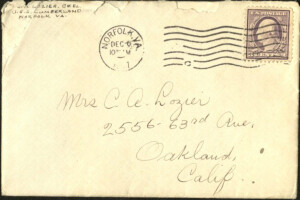 | 12/5/1917 | Cumberland (Unclassified miscellaneous auxiliary ship : IX-8). | Four-page letter from Lozier aboard the U.S.S. Cumberland to his wife Lina. He received a second letter from her today which was written on Thanksgiving. Most of the men from South America are still waiting to be put somewhere. Pay day was today and Lozier received $33. He says he will wire if he gets word of a transfer, and encourages her to write more about what is going on at home. He explains that he enlisted because he felt that it was his duty. Includes envelope. | MS0038/-01.06#01 | |||||
| 20 | 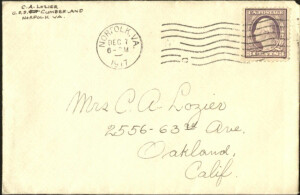 | 12/7/1917 | Cumberland (Unclassified miscellaneous auxiliary ship : IX-8). | Two-page letter from Lozier aboard the U.S.S. Cumberland to his wife Lina. He wants her to come to him at Norfolk and asks her to write her reasons why she won't. He tells of how boring his days are, and what life on the ship is like. He also apologizes for making her upset in his past letters and telegrams, and tells her stories of other men on the ship. Includes envelope. | MS0038/-01.08#01 | |||||
| 21 | 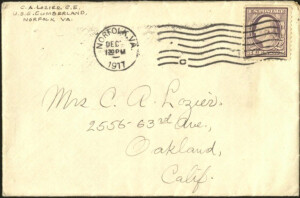 | 12/10/1917 | Cumberland (Unclassified miscellaneous auxiliary ship : IX-8). | Two-page letter from Lozier aboard the U.S.S. Cumberland to his wife Lina about how much he wishes she would come to Norfolk instead of just her letters coming to him. He walked around Norfolk and describes it as bushy and swampy in places. He writes that he dislikes the place and the people. He is going to send what Christmas presents he could buy soon in hopes of reaching his wife in time. Includes envelope. | MS0038/-01.11#01 | |||||
| 22 | 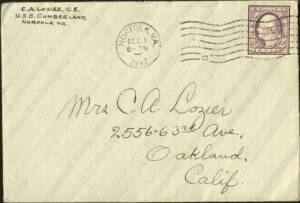 | 12/8/1917 | Cumberland (Unclassified miscellaneous auxiliary ship : IX-8). | Four-page letter from Lozier aboard the U.S.S. Cumberland to his wife Lina about how much he misses her. He admits that he feels bad that he enlisted against her wishes and they haven't seen each other for eleven months. He received letters from his wife and mother today. He wants to request to be stationed on the East Coast, but you have to know someone to ask for you and he only knows George Stafford. Again mentions the cold weather and periodic storms. Mentions that some of the boys go into town for dances at night to cheer up. Includes envelope. | MS0038/-01.09#01 | |||||
| 23 | No image URL. | United States. Navy–Sea life.; Cumberland (Auxiliary ship : IX-8); Pittsburgh (Heavy cruiser : CA-4); South Dakota (Heavy cruiser : CA-9); Hercules (Harbor tug : YT-13). | World War, 1914-1918–Personal narratives.; World War, 1914-1918–Censorship.; Telephone, Wireless. | This is a small collection of letters written and sent between 1917 and 1918. Most of the letters were written by Chester A. Lozier to his wife, Lina C. Lozier, while he was an electrician aboard the receiving ship Cumberland in Norfolk, Virginia. --The collection contains letters detailing some of Lozier's past experiences while traveling in South America aboard the Pittsburgh, his thoughts while traveling to the East Coast, specifically in and around Norfolk, Virginia, as well as his duties aboard the Pittsburgh and the Cumberland. He mentions using wireless radios aboard the ships, as well as sending wires to his wife occasionally. He frequently writes about how much he misses his wife, and repeatedly encourages her to come visit him in Norfolk while he waits for orders. His letters also discuss his paydays, sending money to his wife, and buying life and accident insurance. Many of his letters mention things that may be censored then or in the future, but the letters bear no marks of censorship. One enclosure Lozier sent to his wife was travel notes about the dates, ships, places, and miles that he had already traveled during his enlistment. --Chester Albert Lozier was born on February 21, 1886 in Indiana. Lozier is known to have served in the Navy aboard the Cumberland as a surveyor while it was acting as a receiving ship at Naval Training Station, Norfolk, Virginia. In World War II, Lozier served aboard the Salem and the Pittsburgh. He married Lina Christine Whipple on January 7, 1917 in Oakland, California and adopted a son named Albert Arden Lozier in 1922. Chester Lozier died on January 21, 1968 in Santa Cruz, California. | MS0038 | |||||
| 24 | 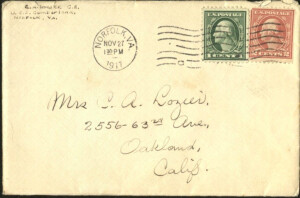 | 11/26/1917 | Cumberland (Unclassified miscellaneous auxiliary ship : IX-8). | Four-page letter from Lozier to his wife. He tells of being on the U.S.S. Cumberland and how it is a Civil War ship that has been raised and remodeled with steam heat and electricity. He discusses sending his wife and mother more money when he gets paid, and that he has taken out life and accident insurance for them in case something happens to him. He hasn't been paid in two months and expects pay on December 5th. He is in Berkeley, Norfolk and expects to work in the Navy Yard. Includes envelope. | MS0038/-01.03#01 | |||||
| 25 | 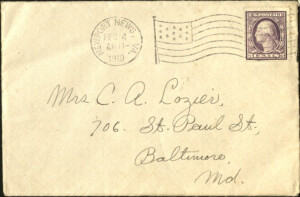 | 2/3/1918 | Four-page letter from Lozier to his wife assuring her that his trip will be safe. Lozier is somewhere in the South, but is going somewhere cold as he details all of the heavy and warm clothes the men have been issued; as well as rubber arctics to go over their shoes. He mentions that some men are being transferred because they need a lot of wireless men back in Norfolk. Includes envelope postmarked from Newport News, Virginia. Envelope addressed to his wife at a Baltimore, Maryland address instead of the previous letter's Norfolk, Virginia address. | MS0038/-01.16#01 | ||||||
| 26 | No image URL. | VESSEL INFORMATION - VESSEL NAME: CORIOLANUS ALL SHIP'S NAMES: CORIOLANUS, TIBURON, EUGENIA EMELIA, LINA (Research by Arnie Janot, 10-22-09, cannot verify the alternate vessel name TIBERSON.) VESSEL TYPE: AMERICAN BARK SHIP BUILDER: A. McMILLAN & SON BUILDER LOCATION: DUMBARTON, SCOTLAND VESSEL BUILT: 1876-1935 VESSEL HISTORY: The sailing ship Coriolanus was built in 1876 by A. McMillan & Son, Dumbarton, Scotland, for J. Patton, Jr. of London. Constructed of Swedish wrought iron and lavishly finished in teak, brass, and mahogany, she measured 217.4 feet long, 35.2 feet beam, with a depth of 20.1 feet; she grossed 1155 tons. Although an extremely fast and busy vessel, she showed little or no profit due to high operating costs, so Mr. Patton turned her over to the operating firm of J. Stewart & Son, London. A few years later she as sold to German interests and while under that flag went ashore at Algoa Bay in 1902. It was at that time she lost the original figurehead, a full length figure of a Roman Warrior, Coriolanus. Following the grounding the vessel was completely reconditioned and altered to barque rig with a new figurehead installed. She was then sold to British interests, and in 1903 was sold again to Norwegian buyers. she remained under the Norwegian flag until 1921, at which time she became the property of Panamanian interests, and her name was changed to Tiburon. Shortly afterward she was seized by U.S. Customs for smuggling [rum] and sold at U.S. Marshal sale to Portuguese-American interests. With the name again changed to Eugenia Emilia, she entered the Cape Verde Island packet trade between New Bedford, Massachusetts and Cape Verde Islands. For the first time she became a passenger-carrying vessel. At the islands she changed hands again and returned to New Bedford as the Lena with her home port Saint Vincinte, CVI. Change of ownership again returned her old name, Coriolanus, and the ship to American registry. In 1932 she was sold to West African Trading Company, retaining her original name. In all she had flown eight different flags, owned by 18 different firms, and hailed out of no less than 13 different ports. She was broken up at Fall River, Massachusetts, in 1935. Another source indicates that the ship was sold in 1932 to Boston and renamed Hispanola, a scientific and pleasure vessel. | CL9169 | |||||||
| 27 | No image URL. | VESSEL INFORMATION - VESSEL NAME: CORIOLANUS ALL SHIP'S NAMES: CORIOLANUS, TIBURON, EUGENIA EMELIA, LINA (Research by Arnie Janot, 10-22-09, cannot verify the alternate vessel name TIBERSON.) VESSEL TYPE: AMERICAN BARK SHIP BUILDER: A. McMILLAN & SON BUILDER LOCATION: DUMBARTON, SCOTLAND VESSEL BUILT: 1876-1935 VESSEL HISTORY: The sailing ship Coriolanus was built in 1876 by A. McMillan & Son, Dumbarton, Scotland, for J. Patton, Jr. of London. Constructed of Swedish wrought iron and lavishly finished in teak, brass, and mahogany, she measured 217.4 feet long, 35.2 feet beam, with a depth of 20.1 feet; she grossed 1155 tons. Although an extremely fast and busy vessel, she showed little or no profit due to high operating costs, so Mr. Patton turned her over to the operating firm of J. Stewart & Son, London. A few years later she as sold to German interests and while under that flag went ashore at Algoa Bay in 1902. It was at that time she lost the original figurehead, a full length figure of a Roman Warrior, Coriolanus. Following the grounding the vessel was completely reconditioned and altered to barque rig with a new figurehead installed. She was then sold to British interests, and in 1903 was sold again to Norwegian buyers. she remained under the Norwegian flag until 1921, at which time she became the property of Panamanian interests, and her name was changed to Tiburon. Shortly afterward she was seized by U.S. Customs for smuggling [rum] and sold at U.S. Marshal sale to Portuguese-American interests. With the name again changed to Eugenia Emilia, she entered the Cape Verde Island packet trade between New Bedford, Massachusetts and Cape Verde Islands. For the first time she became a passenger-carrying vessel. At the islands she changed hands again and returned to New Bedford as the Lena with her home port Saint Vincinte, CVI. Change of ownership again returned her old name, Coriolanus, and the ship to American registry. In 1932 she was sold to West African Trading Company, retaining her original name. In all she had flown eight different flags, owned by 18 different firms, and hailed out of no less than 13 different ports. She was broken up at Fall River, Massachusetts, in 1935. Another source indicates that the ship was sold in 1932 to Boston and renamed Hispanola, a scientific and pleasure vessel. | CL9168 | |||||||
| 28 | No image URL. | NOTES: Sketchbook No. 90 of pencil drawings created by Antonio Jacobsen from 1878 to 1918 for his artworks. VESSELS LISTED IN SKETCHBOOK NO. 90, DATED 1915-1918 THREE MARYS (Schooner,4) (Service Dates 1891-1920) NECHES (Screw Steamship) (Vessel Built 1914) NEW HAMPSHIRE (Screw Steamship) (Service Dates 1892-1937) FLORENCE B. PHILLIPS (Schooner,4) (Service Dates 1917-1924) ANNIE H. SMITH (Ship) Service Dates 1877-1917) JOHN PALMER (Barkentine) (Vessel Built 1900) S.T. CO. NO. 9 (Screw Tug) (Service Dates 1865-1911) CITY OF LINCOLN (Screw Steamship) BRADLEY (Screw Tug) (Service Dates 1910-1958) AUGUSTUS WELT (Schoonber,4) (Service Dates 1889-1917) LINA (Schooner,3) (Vessel Built 1889) TOLTEC (Screw Steamship) (Vessel Built 1911) HARVEST QUEEN (Ship) (Service Dates 1854-1975) ISAAC WEBB (Ship) (Service Dates 1850-1880) HELENA (Ship) BLUESTONE (Screw Tug) (Vessel Built 1868) LEJOK (Schooner,3) (Service Dates 1901-1920) SACHEM (Screw Tug) (Vessel Built 1900) TAILSMAN (Screw Steamship) (Vessel Built 1896) WILLIAM TAYLOR (Schooner,4) (Vessel Built 1917) BJORNSTJERNE BJORSON (Screw Steamship) (Service Dates 1910-1936) SALEM (Schooner,4) (Vessel Built 1902) STORAKER (Screw Steamship) (Vessel Built 1899) LILLE (Screw Steamship) (Vessel Built 1888) QUERNSTAD (Screw Steamship) (Vessel Built 1910) HENRY R. MALLORY (Screw Steamship) (Service Dates 1916-1943) | CL28347 | |||||||
| 29 | 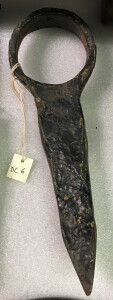 | INVENTORY: Capstan, two (2) bars, capstan cover, and one pawl - there are four (4) component parts. NOTES: Main deck capstan. VESSEL INFORMATION - VESSEL NAME: CORIOLANUS ALL SHIP'S NAMES: CORIOLANUS, TIBURON, EUGENIA EMELIA, LINA (Research by Arnie Janot, 10-22-09, cannot verify the alternate vessel name TIBERSON.) VESSEL TYPE: AMERICAN BARK SHIP BUILDER: A. McMILLAN & SON BUILDER LOCATION: DUMBARTON, SCOTLAND VESSEL BUILT: 1876-1935 VESSEL HISTORY: The sailing ship Coriolanus was built in 1876 by A. McMillan & Son, Dumbarton, Scotland, for J. Patton, Jr. of London. Constructed of Swedish wrought iron and lavishly finished in teak, brass, and mahogany, she measured 217.4 feet long, 35.2 feet beam, with a depth of 20.1 feet; she grossed 1155 tons. Although an extremely fast and busy vessel, she showed little or no profit due to high operating costs, so Mr. Patton turned her over to the operating firm of J. Stewart & Son, London. A few years later she as sold to German interests and while under that flag went ashore at Algoa Bay in 1902. It was at that time she lost the original figurehead, a full length figure of a Roman Warrior, Coriolanus. Following the grounding the vessel was completely reconditioned and altered to barque rig with a new figurehead installed. She was then sold to British interests, and in 1903 was sold again to Norwegian buyers. she remained under the Norwegian flag until 1921, at which time she became the property of Panamanian interests, and her name was changed to Tiburon. Shortly afterward she was seized by U.S. Customs for smuggling [rum] and sold at U.S. Marshal sale to Portuguese-American interests. With the name again changed to Eugenia Emilia, she entered the Cape Verde Island packet trade between New Bedford, Massachusetts and Cape Verde Islands. For the first time she became a passenger-carrying vessel. At the islands she changed hands again and returned to New Bedford as the Lena with her home port Saint Vincinte, CVI. Change of ownership again returned her old name, Coriolanus, and the ship to American registry. In 1932 she was sold to West African Trading Company, retaining her original name. In all she had flown eight different flags, owned by 18 different firms, and hailed out of no less than 13 different ports. She was broken up at Fall River, Massachusetts, in 1935. Another source indicates that the ship was sold in 1932 to Boston and renamed Hispanola, a scientific and pleasure vessel. | CL26168 | |||||||
| 30 | 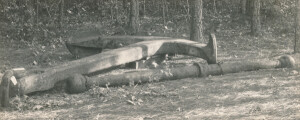 | ADDITIONAL INFORMATION: See object file. VESSEL INFORMATION - VESSEL NAME: CORIOLANUS ALL SHIP'S NAMES: CORIOLANUS, TIBURON, EUGENIA EMELIA, LINA (Research by Arnie Janot, 10-22-09, cannot verify the alternate vessel name TIBERSON.) VESSEL TYPE: AMERICAN BARK SHIP BUILDER: A. McMILLAN & SON BUILDER LOCATION: DUMBARTON, SCOTLAND VESSEL BUILT: 1876-1935 VESSEL HISTORY: The sailing ship Coriolanus was built in 1876 by A. McMillan & Son, Dumbarton, Scotland, for J. Patton, Jr. of London. Constructed of Swedish wrought iron and lavishly finished in teak, brass, and mahogany, she measured 217.4 feet long, 35.2 feet beam, with a depth of 20.1 feet; she grossed 1155 tons. Although an extremely fast and busy vessel, she showed little or no profit due to high operating costs, so Mr. Patton turned her over to the operating firm of J. Stewart & Son, London. A few years later she as sold to German interests and while under that flag went ashore at Algoa Bay in 1902. It was at that time she lost the original figurehead, a full length figure of a Roman Warrior, Coriolanus. Following the grounding the vessel was completely reconditioned and altered to barque rig with a new figurehead installed. She was then sold to British interests, and in 1903 was sold again to Norwegian buyers. she remained under the Norwegian flag until 1921, at which time she became the property of Panamanian interests, and her name was changed to Tiburon. Shortly afterward she was seized by U.S. Customs for smuggling [rum] and sold at U.S. Marshal sale to Portuguese-American interests. With the name again changed to Eugenia Emilia, she entered the Cape Verde Island packet trade between New Bedford, Massachusetts and Cape Verde Islands. For the first time she became a passenger-carrying vessel. At the islands she changed hands again and returned to New Bedford as the Lena with her home port Saint Vincinte, CVI. Change of ownership again returned her old name, Coriolanus, and the ship to American registry. In 1932 she was sold to West African Trading Company, retaining her original name. In all she had flown eight different flags, owned by 18 different firms, and hailed out of no less than 13 different ports. She was broken up at Fall River, Massachusetts, in 1935. Another source indicates that the ship was sold in 1932 to Boston and renamed Hispanola, a scientific and pleasure vessel. ADDITIONAL INFORMATION: The Lewiston Daily Sun, November 19, 1935 Iron Bark Coriolanis is Ready for Last Voyage Sails Soon from Bath to Fall River Ship Breaker's Yard Bath, Nov. 18 (AP) The iron bark, Coriolanus, which flew the flag of six nations over the seven seas since she was built in 1876, was being prepared today for her last voyage-to a ship breaker's yard at Fall River, Mass. A gang of workmen began cutting away the great iron yard that held her lower sails to the wind, and within a few days she will feel for the last time the surge of the ocean-at the end of a tow-rope. The Coriolanus' graceful lines won for the Dumbarton, Scotland shipwrights who fashioned her the gold medal of the Honorable Shipwrights Guild of London, and in her youth, she made a voyage from London to Calcutta in 69 days the equal clipper ship time. When the Coriolanus sailed under the British Jack, she as a full-rigged ship, Norwegians who bought her in 1904 changed her to the more economical bark rig. Later she sailed under the flags of Germany, Portugal, Panama and the United States. Several years ago she was brought here to be refitted for service between New Bedford and the Cape Verde Islands. But the scheme never materialized, and she has been tied up at a local pier since. Soon she will meet the same fate of many another old square-rigger. The breaker's hope to get 400 tons of iron out of her hull. Excerpt from "Cape Verde Packet Trade" by Ray Almeida [Excerpted from Cape Verdeans in America: Our Story, ed. Raymond A. Almeida. Boston: Tchuba-American Committee for Cape Verde, Inc., 1978. Boston.] In 1929 [Roy] Teixeira joined with Albio and Antonio Macedo in acquiring the 300-foot Coriolanus. She was a luxury ship by comparison with the other Cape Verde packets, carrying 200 passengers plus crew. The ship had tiled bathrooms, electric lights, a radio, and a paid orchestra aboard, as well as a newspaper listing the daily activities. There were constant celebrations, such as the "christening" of the crew's pet monkey. (The ill-fated monkey perished when he fell from a yardarm in a storm.) Teixeira decided to take his new bride to his homeland on the Coriolanus. What began as a pleasant voyage was not without a few challenges. Several days out they ran into a storm during the night. The cargo shifted, and the ship would not right itself. Captain Sena was afraid to jettison the trucks and crates on deck on his own authority and so awoke Teixeira who immediately ordered the vehicles and the cargo on the leeward side thrown over. Slowly the ship began to right herself, and all were saved. Just a few days out of Sao Vicente an old man, who was going back to retire in the islands, died. A brief ceremony was held for him, and he was buried at sea. Teixeira had the Coriolanus for several more years. Toward the end, she made a record passage from New Bedford to Santo Antao in seventeen and one-half days, in spite of being becalmed for three days in the doldrums. On the return trip from Fogo with eight passengers and a crew of 38 men, she was struck by a squall which brought down some of her upper rigging, leaving it in a tangled heap on deck. Her crew fought to save her, cutting away the broken spars as raging seas swept across her rails. The ex-clipper was still seaworthy, and she limped to New Bedford under shortened canvas. When she docked there on September 11, 1930, her sailing days were over. http://www.bruzelius.info/Nautica/Ships/Merchant/Sail/C/Coriolanus(1876).html Coriolanus: An iron full rigged ship built in 1876 by Archibald McMillan & Son, Dumbarton. Dimensions: 271'4"×35'2"×20'1" and tonnage: 1074 GRT, 1046 NRT and 946 tons under deck. The model of the Coriolanus was awarded the Gold Medal at the Shipwright's Exhibition in London 1877. Rigged with a main skysail, and royal sails over double top and single topgallant sails. 1876 May Launched at the shipyard of Archibald McMillan & Son, Dumbarton, for John Patton, Jr & Co., London. Assigned the official British Reg. No. 73665 and signal QKTJ. 1877 Sailed from Scilly Islands to Calcutta in 69 days under command of Capt. McLachlan. This passage time has been equalled but never beaten. 1886 Sold to John Stewart & Co., London. [Henderson has 1884] 1887 Captain J.T. Torkilsen was given command of the ship. 1890 February Collided with and sank the steamer Claymore on voyage from the Iquique with nitrate. 1891 Sold to I.F. Ramien, Elsfleth, Germany, for £8000. Capt. I. Götting was given command of the ship. 1902 September 1 Grounded at Port Elizabeth, Algoa Bay, during a storm and was severely damaged together with the barques Nautilus and Arnold. Was condemned due to the damages. 1903 Sold to E.B. Aaby, Drammen, Norway and was reduced to a royal-sail rigged barque. Renamed Lina according to Höver. 1903-1904 British owners. 1921 Sold to American owners who registered the ship in Panama and renamed her Tiburon. [Henderson has 1922] 1921 July Was arrested in Boston with a cargo of alcohol. 1921 Sold to Louis d'Oliviera for $7525 and was renamed Eugenia Emilia. 1923 Arrested with contraband and sold at New Bedford to J.O. Amarantes, Praia, Cape Verde, for $6750. 1927 Sold to Abilio Monteior de Macedo, Praia, for $1000 and was renamed Coriolanus. 1931 Sold to Arthur B. Cotnoir, New Bedford, MA, for $690. 1931 December Sold to Clarence Nelson Rogers, Boston, MA, for $250. 1936 August Towed to the General Iron Smelting Co., Fall River, MA, to be broken up. References: •Square rigged ships, general references. •Comee, Fred T.: The Last Days of the Coriolanus. Sea History, Vol. 39 (1986), pp 23-26. •Henderson, Anthony: Coriolanus's Career. Sea Breezes Vol. 22 (1956), p 93. •Matson, Norman: The Log of the Coriolanus. The Vanguard Press, New York, 1930. •Miller, James L.: Coriolanus. Sea Breezes Vol. XI (1928), p 87. •Morgan, Charles S.: Floreat Coriolanus! Sea History Vol. 41 (1986), p 3. •Napier, Rob: Coriolanus. Nautical Research Journal Vol. 41 (1996), pp 193, 252-253, ill. •Napier, Rob: Coriolanus Revisited. Nautical Research Journal Vol. 42 (1997). pp 13-14, ill. | CL1497 | |||||||
| 31 | 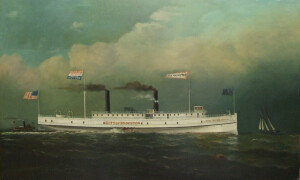 | NOTES: The Fall River Line was a famous and long-running passenger transportation service (1847–1937) that connected New York City and Boston via a combination of overnight steamboat travel along Long Island Sound (and Narragansett Bay) and rail connections. Passengers typically took a night boat from New York to Fall River, Massachusetts, then continued by train to Boston (or vice versa), making it a luxurious and popular "rail-water" route, especially during the Gilded Age. The company was founded by Richard Borden who began a regular steamboat service between New York City and Fall River in 1847 (the Bay State Steamboat Company/Bay State Line). In 1863 the Bay State Steamboat Company was sold to the Boston, Newport and New York Steamboat Company, and the railroad was extended between Fall River and Newport, Rhode Island. In 1869 the line was sold to the Narragansett Steamboat Company (Narragansett Steamship Company). In 1872 the Fall River Line was completely reorganized and became part of the Old Colony Railroad, under the name Old Colony Steamboat Company. In 1893, the Fall River Line became part of the New York, New Haven and Hartford Railroad (commonly called the New Haven Railroad). Under this railroad's influence, the steamboat operations (including the prominent Fall River Line) were reorganized and operated through the New England Navigation Company (organized January 1, 1905, the Fall River Line became a division in 1906). By the early 1910s (evidenced by references like 1913 stock certificates and reports), operations and marketing increasingly used New England Steamship Company (often abbreviated N.E.S.S. Co.). The shift to the new name likely occurred gradually between 1905 and 1910, with the name "New England Steamship Company" becoming the primary public and operational identity by the late 1900s/early 1910s. No single "renaming date" is pinpointed in primary sources, but the effective transition to the Steamship Company name for day-to-day branding and management was complete by around 1910–1912. The New England Steamship Company directly managed and marketed the Fall River Line's fleet of elegant side-wheel steamships (such as the Pilgrim, Priscilla, Puritan, Commonwealth, and Providence). After its employees went on strike in the middle of 1937, the company chose, in the face of ongoing losses due to land transportation, to liquidate rather than negotiate with the union. Vessels operated by the line: Bay State (1847), Massachusetts (1847), Empire state (1848), State of Maine (acquired 1849), Metropolis (1854), Old Colony (1865), Newport (1865), Bristol (1867, acquired 1869), Providence (1867, acquired 1869), Pilgrim (1883), City of Fall River (1883, freighter), City of Brockton (1886, freighter), Puritan (1889), Plymouth (1890; rebuilt 1906-1907), City of Taunton (1892, freighter), Priscilla (1894), Providence (1905), and Commonwealth (1908). VESSEL INFORMATION - VESSEL NAME: CITY OF BROCKTON VESSEL BUILT: 1886 SERVICE DATES: 1886-1928 SHIPBUILDER: MONTGOMERY & HOWARD BUILDER LOCATION: CHELSEA, MASSACHUSETTS DATE OF DISPOSAL: Usable materials removed and freighter towed to Revere and anchored off the beach, soaked in gasoline, and set on fire on July 4th, 1929 VESSEL HISTORY: --Fall River Herald, July 2, 1886, page 4: The new side-wheel freight steamer, City of Brockton, built for the Fall River Line, was launched at the yard of the builders, Montgomery & Howard, yesterday...The City of Brockton is a twin to the City of Fall River, although ten feet longer. She measures 290 feet over all, and is 42 feet beam, with a carrying capacity above the water line of about 100 freight car loads...The width of the steamer's guards is 75 feet. [the article discusses the problems of getting the vessel through the draw bridge at Meridian Street] --The Day, June 9, 1928, page 14: The New England Steamship Company steamer City of Brockton, which has been tied up at the Norwich Line wharf for the greater part of the winter, was once again back into active service today. She was taken to New Haven to replace the freighter New Haven which has been taken off the New York-New Haven run to carry freight to this city in placed of the passengers ship City of New Hampshire. --The Herald News, October 4, 1928, page 12: Discusses the purchase of the vessel by Albilio Monteiro de Macedo of the bark Coriolanus (named Lina). Macedo purchased the freight City of Brockton as it was being dismantled at Newport. He would strip the vessel down and transfer useful materials to the bark. The City of Brockton was built in 1886 in Chelsea, being 271.2 feet long, 42.4 feet wide and 13.1 feet deep. --The Herald News, October 18, 1928, page 15: Contains an article about the bark Coriolanus being owned by Abilio Monteiro de Macedo, mayor of Praia, states that this summer he purchase steamer City of Brockton, Long Island Sound freighter. Lifeboats and other suitable equipment was transferred to the bark, and the hull was reduced to junk. --The Herald News, June 29, 1929, page 1: The City of Taunton and City of Brockton, Fall River Line boats, would be destroyed by fire on Wednesday or Thursday of the following week. Abraham Cohen of Boston is the owner of both. Since being put out of commission last year by the New England Steamship Company, the two freighters have been in and out of trouble aplenty. The City of Brockton was purchased by a Portuguese shipping man and brought to New Bedford, where she was stripped of numerous accessories. These were placed aboard to bark Coriolanus, the most modern of packet schooners. Then, the rest and residue of the old freighter was turned over to Cohen. For months, she remained at Merrill's Wharf, New Bedford, and complaints of damage being done to buildings on that pier followed. Finally the vessel was moved and yesterday, a tug towed her around to Revere, where she will be saturated with gasoline and anchored a short way off the beach on Wednesday night. Airplanes will circle above and drop ignition bombs. Skyrockets, with time fuses, will be placed aboard the ship and spectators should be treated to an air battle deluxe. At the same time over on the Somerset shore of Mount Hope bay steamer City of Taunton will be set afire, making a blaze that will light up the vicinity for miles around. [Additional information on the City of Taunton follows.] | CL8761 | |||||||
| 32 | 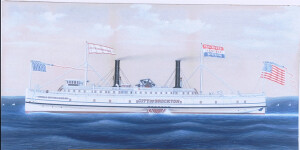 | NOTES: The Fall River Line was a famous and long-running passenger transportation service (1847–1937) that connected New York City and Boston via a combination of overnight steamboat travel along Long Island Sound (and Narragansett Bay) and rail connections. Passengers typically took a night boat from New York to Fall River, Massachusetts, then continued by train to Boston (or vice versa), making it a luxurious and popular "rail-water" route, especially during the Gilded Age. The company was founded by Richard Borden who began a regular steamboat service between New York City and Fall River in 1847 (the Bay State Steamboat Company/Bay State Line). In 1863 the Bay State Steamboat Company was sold to the Boston, Newport and New York Steamboat Company, and the railroad was extended between Fall River and Newport, Rhode Island. In 1869 the line was sold to the Narragansett Steamboat Company (Narragansett Steamship Company). In 1872 the Fall River Line was completely reorganized and became part of the Old Colony Railroad, under the name Old Colony Steamboat Company. In 1893, the Fall River Line became part of the New York, New Haven and Hartford Railroad (commonly called the New Haven Railroad). Under this railroad's influence, the steamboat operations (including the prominent Fall River Line) were reorganized and operated through the New England Navigation Company (organized January 1, 1905, the Fall River Line became a division in 1906). By the early 1910s (evidenced by references like 1913 stock certificates and reports), operations and marketing increasingly used New England Steamship Company (often abbreviated N.E.S.S. Co.). The shift to the new name likely occurred gradually between 1905 and 1910, with the name "New England Steamship Company" becoming the primary public and operational identity by the late 1900s/early 1910s. No single "renaming date" is pinpointed in primary sources, but the effective transition to the Steamship Company name for day-to-day branding and management was complete by around 1910–1912. The New England Steamship Company directly managed and marketed the Fall River Line's fleet of elegant side-wheel steamships (such as the Pilgrim, Priscilla, Puritan, Commonwealth, and Providence). After its employees went on strike in the middle of 1937, the company chose, in the face of ongoing losses due to land transportation, to liquidate rather than negotiate with the union. Vessels operated by the line: Bay State (1847), Massachusetts (1847), Empire state (1848), State of Maine (acquired 1849), Metropolis (1854), Old Colony (1865), Newport (1865), Bristol (1867, acquired 1869), Providence (1867, acquired 1869), Pilgrim (1883), City of Fall River (1883, freighter), City of Brockton (1886, freighter), Puritan (1889), Plymouth (1890; rebuilt 1906-1907), City of Taunton (1892, freighter), Priscilla (1894), Providence (1905), and Commonwealth (1908). VESSEL INFORMATION - VESSEL NAME: CITY OF BROCKTON VESSEL BUILT: 1886 SERVICE DATES: 1886-1928 SHIPBUILDER: MONTGOMERY & HOWARD BUILDER LOCATION: CHELSEA, MASSACHUSETTS DATE OF DISPOSAL: Usable materials removed and freighter towed to Revere and anchored off the beach, soaked in gasoline, and set on fire on July 4th, 1929 VESSEL HISTORY: --Fall River Herald, July 2, 1886, page 4: The new side-wheel freight steamer, City of Brockton, built for the Fall River Line, was launched at the yard of the builders, Montgomery & Howard, yesterday...The City of Brockton is a twin to the City of Fall River, although ten feet longer. She measures 290 feet over all, and is 42 feet beam, with a carrying capacity above the water line of about 100 freight car loads...The width of the steamer's guards is 75 feet. [the article discusses the problems of getting the vessel through the draw bridge at Meridian Street] --The Day, June 9, 1928, page 14: The New England Steamship Company steamer City of Brockton, which has been tied up at the Norwich Line wharf for the greater part of the winter, was once again back into active service today. She was taken to New Haven to replace the freighter New Haven which has been taken off the New York-New Haven run to carry freight to this city in placed of the passengers ship City of New Hampshire. --The Herald News, October 4, 1928, page 12: Discusses the purchase of the vessel by Albilio Monteiro de Macedo of the bark Coriolanus (named Lina). Macedo purchased the freight City of Brockton as it was being dismantled at Newport. He would strip the vessel down and transfer useful materials to the bark. The City of Brockton was built in 1886 in Chelsea, being 271.2 feet long, 42.4 feet wide and 13.1 feet deep. --The Herald News, October 18, 1928, page 15: Contains an article about the bark Coriolanus being owned by Abilio Monteiro de Macedo, mayor of Praia, states that this summer he purchase steamer City of Brockton, Long Island Sound freighter. Lifeboats and other suitable equipment was transferred to the bark, and the hull was reduced to junk. --The Herald News, June 29, 1929, page 1: The City of Taunton and City of Brockton, Fall River Line boats, would be destroyed by fire on Wednesday or Thursday of the following week. Abraham Cohen of Boston is the owner of both. Since being put out of commission last year by the New England Steamship Company, the two freighters have been in and out of trouble aplenty. The City of Brockton was purchased by a Portuguese shipping man and brought to New Bedford, where she was stripped of numerous accessories. These were placed aboard to bark Coriolanus, the most modern of packet schooners. Then, the rest and residue of the old freighter was turned over to Cohen. For months, she remained at Merrill's Wharf, New Bedford, and complaints of damage being done to buildings on that pier followed. Finally the vessel was moved and yesterday, a tug towed her around to Revere, where she will be saturated with gasoline and anchored a short way off the beach on Wednesday night. Airplanes will circle above and drop ignition bombs. Skyrockets, with time fuses, will be placed aboard the ship and spectators should be treated to an air battle deluxe. At the same time over on the Somerset shore of Mount Hope bay steamer City of Taunton will be set afire, making a blaze that will light up the vicinity for miles around. [Additional information on the City of Taunton follows.] | CL6796 |
Created 2026 by Don Barker, CBMM volunteer, for the Chesapeake Shipbuilding Project. shipbuilding@sailingworkboats.es